Quick few words about Shoe Dog: A Memoir by the Creator of Nike- A book by Phil Knight
“Shoe dog: Shoe dogs are the people who devoted themselves solely to the making, selling, buying or designing of shoes”
That’s how Mr. Phil Knight defines a shoe dog and that spirit of oneness with your chosen profession or your ‘calling’ is what shoe dog is about. It’s an inspiring tale of an Oregonian entrepreneur who went on a soul searching journey to the Orient and came back with the wisdom that guided him throughout the toughest times of his life.
This book is for anyone who is trying to achieve their dreams, trying to get somewhere in the life and falling asleep at the end of the day with head down on their drawing board or the study table or the keyboard. This book is for anyone who is traversing the mountain of misery with no end in sight.
This book is filled with helpful advise and pointers for a budding industrialist who want to raise up their empires. In all the endeavors of our life, Mr. Knight encourages us to be “Professors of the jungles “ or to be the best of the domain experts of whichever field we choose as our profession. He also implores young students to find the oneness or the ‘calling’ that will bring peace through their very existence. This book leaves you with a sense purpose, excitement and zen for your calling.
It’s been a hietus from reading for almost 3 years. It’s only when my wife Shruti opened an account with Wilmington public library, I was pulled back in the world that I used to love so much. I was looking for a book that wasn’t much on page count and something that would inherently attract me. While grazing through history book row I spotted ‘Bells of Nagasaki‘ by Takashi Nagai. Being from library it was a battered copy of hundred something pages and was looking out to be promising candidate for my renewed conquest into literary world.
Just to have the taste of things to come, I started reading the introduction of book and by the time I finished it, I was all welled up inside. William Johnston, who translated the original Japanese masterpiece gave A very fitting start to this saga of human survival. He introduced Mr. Nagai as a radiologist in the radiology department of Nagasaki Medical College Hospital. The introduction itself was very heart touching in a sense that it briefly outlined transition of Dr. Nagai from a man of science to the Saint of peace.
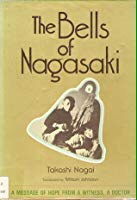
Front cover
I brought the book to home and started reading it whenever I could spare few minutes of the day. The book started with narration by Dr. Nagai. Author presented the backdrop of Nagasaki at the end of World War II, where hope of winning the war was swiftly dwindling and each siren of air raid was then just a routine exercise of trained minds. On the fateful day of 9 August 1945, at around 11am the second atomic bomb that was ever used in human civilization struck Nagasaki. At the time of the atomic bombing, Dr. Nagai was working in The college. He received a serious injury to his head but joined the rest of the surviving medical staff immediately after he regained his consciousness. From this moment, we embark upon a journey from the point of view of a peace ambassador. The book goes into the details of the actual events on that dark day, the aftermath and the relief work that was undertaken as the help pours over from over the world. Anyone who is going through the rough times, this book will serve as a lamp post to pass through the darkest of the times.
Tools and Techniques for Better Learning: My Personal Playbook
If you’re navigating exams, technical certifications, or just a long list of things you want to learn—welcome. Over the years, I’ve explored and refined a few learning strategies that have helped me retain complex material, stay motivated, and actually enjoy the process. Here’s a behind-the-scenes look at the tools and techniques that work for me—and might work for you too.
📝 1. Taking Notes: From Paper Trails to Cloud Maps
Gone are the days of crumpled notebooks and disjointed scribbles. If you’re in school—or even self-studying—mindful, structured note-taking is a game-changer.
I use a tablet (like the iPad) with Goodnotes or Notability to:
Record lectures while taking real-time notes
Snap photos of complex diagrams during a session
Keep all notes in synced cloud folders, organized by subject notebooks
The Apple Pencil makes handwritten annotations smooth and personal, which strangely helps with recall. This setup feels more like a digital sketchpad for my brain than a static doc.
🔁 2. Revising Smart: Active Recall + Small Incentives
Revision isn’t about rereading—it’s about challenging your memory. I follow Ali Abdaal’s Active Recall method, which forces me to pull concepts out of memory rather than passively reabsorb them.
A few techniques I lean on:
Write questions while studying. Test yourself later.
Use the Pomodoro Technique to stay focused in short bursts.
Reward loops work too: Revise for 25 mins → 5 mins of guilt-free scrolling.
Ali’s YouTube channel is a treasure trove of brain-friendly methods if you’re keen to experiment.
🔄 3. Context Switching: Flip the Format, Not the Topic
Let’s be real—sometimes your attention just won’t cooperate. When motivation dips, I lean on context switching, not topic switching.
Say I’m prepping for a certification:
I’ll start with a video series to get my brain into gear
Then shift to reading material once I’m more engaged
If I’m on the move, I plug into a podcast on the same subject
The content stays consistent, but the format flexes to suit my energy.
📊 4. Progress Tracking: Build a System, Not Just a To-Do List
Whether I’m learning for a class or preparing for a cert like CISSP or ITIL, I create a custom Google Sheet tracker that might include:
A study timeline
Resource links
Progress bars by module or topic
Notes on pain points
I often use AI tools like ChatGPT, Copilot, or Gemini to build an efficient prep strategy. A prompt like “Make me a 4-week prep plan for [exam name] using [resources]” yields surprisingly useful scaffolding.
🔑 Final Thought
These techniques aren’t magic bullets. They just help me learn consistently. And that’s the real unlock. Try things out, mix and match, and listen to your rhythms. You’ll find a system that clicks.
If you’ve got a favorite method or tool, I’d love to hear about it—drop a comment or subscribe to stay in touch. Let’s keep learning, experimenting, and leveling up together.
A Journey Through ITIL 4: Streamlining Knowledge, One Service at a Time
Some certifications sharpen your thinking. Others reframe how you see the organization. And then there are those rare ones—like ITIL 4 Foundation—that do both while bringing clarity to the chaos of service management.
After immersing myself in deep technical domains like networking and cybersecurity, I wanted to zoom out and understand how services and teams operate at scale. ITIL 4 became that lens—not just to pass an exam, but to mature the way I think about structure, efficiency, and value delivery.
Getting Started: A Gentle Ramp
I kicked off my preparation with ITIL 4 Essentials – Your Essential Guide for the ITIL 4 Foundation Exam and Beyond by Claire Agutter (2nd edition). The book broke down ITIL’s Service Value System and key practices into bite-sized, relatable insights—exactly what I needed to move from abstract theory to meaningful application. As someone balancing work and study, it served as a calm and structured entry point.
Leveling Up with Jason Dion
Once the foundations were in place, I signed up for Jason Dion’s ITIL 4 Foundation course. This was a turning point.
Not only did the video lessons demystify trickier concepts like value co-creation and the guiding principles, but the practice exams (300+ questions!) mirrored the real exam so well that they put me into “exam mode” without the pressure. The 60-day pass guarantee didn’t hurt either—it was clear the team stood behind their content.
A Power Review: 7 Days of Focus
To sharpen my readiness, I tackled Become ITIL 4 Foundation Certified in 7 Days by Abhinav Krishna Kaiser. Think of it as an effective primer for rapid review. Combined with the Dion material, it helped me identify not just what I knew, but what I still misunderstood—and that made all the difference.
Learning Through Community (and YouTube)
I supplemented my prep with YouTube, especially Value Insights – Agile and ITIL Training Partner. These bite-sized lessons and conversations deepened my conceptual understanding and kept me engaged on days when books felt too static. Sometimes, a single video analogy makes a whole framework click.
Practice Makes Prepared
The final stretch of my preparation was powered by Jason Dion’s practice tests. Attempting full-length exams, reviewing wrong answers, and tracking progress helped me shed the final bit of doubt before the real test.
Exam Day: Calm, Clean, and From Home
One of the things I appreciated most about ITIL 4 was how accessible the exam felt. I scheduled the online proctoring session from home, and the entire experience was smooth and glitch-free. Within a few minutes of submitting, I saw the good news: I’d passed. On the first try.
Final Thoughts
ITIL 4 Foundation isn’t just another line on your resume. It’s a reframe for anyone working in IT, cybersecurity, or service delivery—especially if you’re aiming to streamline team operations, clarify workflows, or think at the enterprise scale.
If you’re exploring certification paths or have questions about ITIL, feel free to reach out or subscribe to my newsletter. I’m always happy to guide fellow learners through their own journeys.
There are very few certifications out there which genuinely makes you feel exalted about your skillset and makes yourself believe more in yourself. CISSP Certification is not exactly something that you just achieve. You need to be really worthy of its code of ethics and embody those principals in the real life to make your day to day decisions.
I started preparing for CISSP start of the year 2020. I still remember how optimistic I was to take on this new challenge. I was certain that before I see the middle of this year, I’ll be Certified Information Systems Security Professional. Then as with many other things in the year 2020, life had other plans for all of us. I enthusiastically scoured various blog posts, websites and forums to come up with the ideal reading list for CISSP for a working professional like me with an experience of few years in system administration. After reading good number of personal experiences, I decided to read through below books in the given order:
1) CISSP For dummies 6th edition
2) All in one CISSP
3) CISSP Official practice tests
4) 11th hour CISSP
5) CISSP Official Study guide
6) Supplementary CISSP Practice questions
CISSP for dummies was a good primer as far as CISSP concepts are concerned. As with any other dummies book, the concepts explained through this book are extremely easy to digest and this book boosted my confidence to take the CISSP challenge. What should’ve been a month’s easy read, turned out to be a 2-month reading experience. I diligently put at least one hour each day after dinner to familiarize myself through the 8 CISSP domains through this book.
After I finished with CISSP for Dummies, I was certain that CISSP is something that I’m interested to pursue further. That’s when I felt the time was ripe to dig further dip in the world of security. I started reading through All in one CISSP book and all in all, I truly perceived the depth and width of different CISSP domains. This giant 1200+ pages book covers each and every aspect of CISSP domains in a depth that truly surpasses the stringent of the requirements for this exam. Going through each topic, understanding the concepts and taking concise notes took lot of time and I was working my way through this book till the middle of the year. I also made sure that as soon as I finish any domain through this book, I complete questions corresponding to that domain from CISSP official practice tests book. After finishing up both All in one CISSP book and domain specific questions from CISSP Official practice tests I was confident that I’m on track to my exam. Then there was period in my life where something came up and priority of CISSP preparation took a back seat. During this time, since I was not able to pay 100% attention to my CISSP preparation, I started watching Thor Penderson’s videos as the time permits.
I was back on track in the month of November. I did a quick revision of all the domains through my personal notes and 11th hour CISSP. After brushing up all the domains, I re-focused my attention on CISSP official study guide. Instead of going through this book page to page, I attempted one full length practice test through CISSP Official practice tests And determined which are the specific domains where I’m really weak and I read through those corresponding chapters through CISSP Official Study guide. After completing all 21 chapters from official study guide I decided that I’ve familiarized myself to an extent where I can think of taking up the exam. I changed my mode of preparation from study mode to exam mode.
For the longest of the time, I was contemplating whether to go for the paid memberships of any of the popular websites like ccure and studynotesandtheory.com. Based on all the reviews I read, I knew they were worth it but I was bit short on time since I wanted to go for my exam before the end of this year. So, I purchased exam simulation from Boson and started giving full length exams in simulation mode. I also purchased official CISSP app through apple store and was also attempting full length exams. I found Boson exam questions very though provoking. Initially I was not able to pass any of my Boson exams for the first 2 exams. Despite no apparent success, I diligently went through questions that I got wrong and understood what went wrong. Also, I started revising memory palace, Sunflower and comparitech notes. Each of these notes helped me drill down facts that were so easy to forget over the course of the preparation. At the start of December, I selected Dec 21 as the final date where I’ll test my preparation and fate. Even though I was periodically giving tests and revisiting domains where I scored poorly, my score was barely reaching 70% and I was afraid that this won’t be enough. Since it was end of year, soon we hit change freeze in my place of work and I was able to put in more and more hours in my preparation. I rescheduled my exam again to Dec 23 and entered into the final stage of my preparation where I was revising notes multiple times of the day and attempting at least 1 full length of test prior to going to the bed. After rigorously testing and preparing for last 2 weeks, I attempted my test on December 23.
Exam day:
I booked an appointment to a testing center which was around 35 miles from my place of residence. This particular Pearson center was in the middle of major metropolitan city on the East Coast and I knew that parking will be an issue from the beginning. Just to familiarize myself with the test venue I drove to this testing center a week before and already looked up a nearby garage where I can leave my car without any worry. My exam was scheduled at 8 AM on a weekday. Expecting a delay in commute, I kept half an hour margin on the day of the exam. I reached to my exam center at 7.30 am and I was asked to visit restroom and clean up my hands prior to testing center. Since this particular exam center was in a major east coast metropolitan, there were 6 other test participants before me on that day and it was around 8.15 that I was finally completely checked in. After carefully going through Non Disclosure Agreement I hit I accept and all the period after it was one of the most challenging time period I had in recent times. I felt that understanding of my each and every CISSP domain specific concepts is being put into test and at the end of it, I’m glad that I emerged out victorious.
For those of us who wish to foray into the world of information security, this certification is certainly a place to be and wish the best luck to those who are willing to go for it.
Every journey into cybersecurity begins differently. Mine started with tangled cables, subnet calculators, and Cisco routers. If you’re just stepping into this world or wondering which path leads where—welcome. This is the post I wish I had when I started.
Phase One: Grounded in Networking
I began as a Network Engineer, navigating the OSI model and configuring switch stacks in physical data centers. My foundational certifications—CCNA, CCDA, CCNP, and the CCIE Written—gave me a deep understanding of how systems communicate and where vulnerabilities often begin. If you’re curious about protocols, packet flows, and the heartbeat of the internet, this is an excellent place to start.
Phase Two: Surfing the Cloud Wave
As the Cloud Age gained momentum, I shifted my focus to AWS, Azure, and GCP—learning how infrastructure was reimagined for scalability and resilience. I earned my AWS Cloud Practitioner and AWS Solutions Architect Associate, and found myself designing and deploying networking stacks in the cloud, integrating legacy systems with cloud-native capabilities.
Phase Three: Enter Cybersecurity
The more I worked at the intersection of networks and the cloud, the more I saw the growing importance of Cybersecurity. Studying for the CISSP opened up the vast, nuanced world of cybersecurity—from governance to cryptography to IAM. That learning translated into action as I moved into the Identity and Access Management (IAM) domain, helping enterprises safeguard their digital front doors.
Completing ITIL along the way gave me insight into how security fits into broader enterprise operations—a perspective that’s often underestimated but incredibly powerful in practice.
Your Map Might Look Different (And That’s Okay)
This was my path: Network Engineer → Cloud Builder → Cybersecurity Practitioner. Yours might start with a security bootcamp, a SOC analyst role, or a software development background. There’s no “one size fits all”—and that’s the beauty of this field.
But if you’re looking for a starting point or a roadmap to guide you, I highly recommend this curated certification pathway by Paul Jerimy:
It’s an excellent visual guide to understand where you are, where you’re headed, and what tools might help you get there.
💬 Let’s Keep This Dialogue Going
Whether you’re working toward your first certification or deciding between IAM and red teaming, I’m happy to help. Subscribe to the newsletter for practical advice, new “starter kits,” and personal reflections on what it means to build a career in cybersecurity. I also keep my schedule open for a quick sync up calls with budding professionals to provide guidance to their career journey. Please feel free to reach out to me via contact form in the blog. Also be on the lookout for my upcoming posts on CISSP and ITIL certifications and my approach towards achieving those.
You don’t have to figure it all out at once. Just start—and stay curious.
I blend a lifelong curiosity with professional precision to explore the ever-evolving world of cybersecurity, identity, and access management. This blog is my digital lab—where I unpack what I learn, challenge what I know, and share practical insights for fellow professionals, curious learners, and forward-thinking technologists.
Driven by the spirit of innovation and the belief that knowledge grows when it’s shared, I aim to make complex ideas accessible, inspire new perspectives, and build a community around continuous learning and thoughtful exploration.





 The Secure Gradient